
Electric Car Insurance Ireland: A Guide for Used-EV Buyers
Contents
- Why Electric Car Insurance in Ireland Is Not a Simple Comparison
- What Drives an EV Premium in Ireland
- EV-Specific Cover Points You Should Check With the Insurer
- Practical Ways to Keep the Bill Down
- Documentation Buyers and Sellers Should Provide
- What to Ask Dealers and Private Sellers Before You Quote
- Insurance in the Real Cost of Running a Used EV
Shop around is lazy advice for electric car insurance Ireland. The issue is not whether an EV is always cheaper or always dearer than a petrol car, it's what the policy covers, how the insurer prices the car's repair risk, and whether the listing gives a buyer enough evidence to judge the battery and range.
Used-EV buyers need a different mindset. A motor policy is compulsory on public roads in Ireland, and the car still has to be insured like any other vehicle, but the underwriting questions are different when battery condition, charging gear, and specialist parts are part of the risk picture. That's why a good listing should foreground State of Health (SoH), not just glossy photos and a headline range.
Why Electric Car Insurance in Ireland Is Not a Simple Comparison
The usual EV insurance question, "is it cheaper than petrol?", is too blunt to be useful. In Ireland, the answer changes with the driver, the address, the car, the repair network, and the exact policy wording. A used EV buyer should care less about a single headline number and more about whether the cover matches the way an EV fails, gets repaired, and gets recovered.
The market itself has moved enough to make old assumptions weak. Irish commentary says EV premiums are typically about 12% more expensive on average than ICE vehicles, but the gap has narrowed as insurers have gained more EV claims experience and premium volatility has eased Howden analysis. Irish registration data tells the same story from the other side, with EV numbers growing fast enough to give insurers better pricing data Allianz Ireland market overview.
Practical rule: ask what the policy covers before asking whether it is "cheap". A cover that ignores the battery, cable, or wallbox can look fine on paper and still leave a used-EV buyer exposed.
ShamAuto's EV guide matters here because used-EV listings should be read through a battery-first lens. A car with strong SoH, sensible range, and the right accessories is easier to price, easier to compare, and usually easier to insure cleanly than a vague listing that hides the details.
What Drives an EV Premium in Ireland
Insurance pricing for an EV is not driven by the fuel type alone. The insurer looks at the driver's age and claims history, the address, the car's value, the expected repair cost, the availability of parts, and the insurer's own view of the model's risk. That is why the same general EV can produce very different quotes for two buyers who otherwise think they're comparing like with like.
Model choice matters more than the badge on the boot
Model differences still tell a useful part of the story. Premium pricing follows the trim and the repair profile, not just the fact that the car is electric.
Insurers are also using much more detailed vehicle data now. Verisk says its UK and Ireland EV database carries more than 175 attributes per BEV/PHEV, including battery capacity, efficiency, acceleration, top speed, charge location, and range under different conditions Verisk EV database. In plain English, that means a quote can now be tied to a specific EV trim rather than a vague fuel-type bucket.
The higher repair bill risk is not just about the battery. Specialist parts, technician training, and trim-specific components all shape the insurer's view of severity after a claim. That is why a well-specified used listing matters so much, because a buyer who knows the exact car can get a quote that is relevant.
EV-Specific Cover Points You Should Check With the Insurer
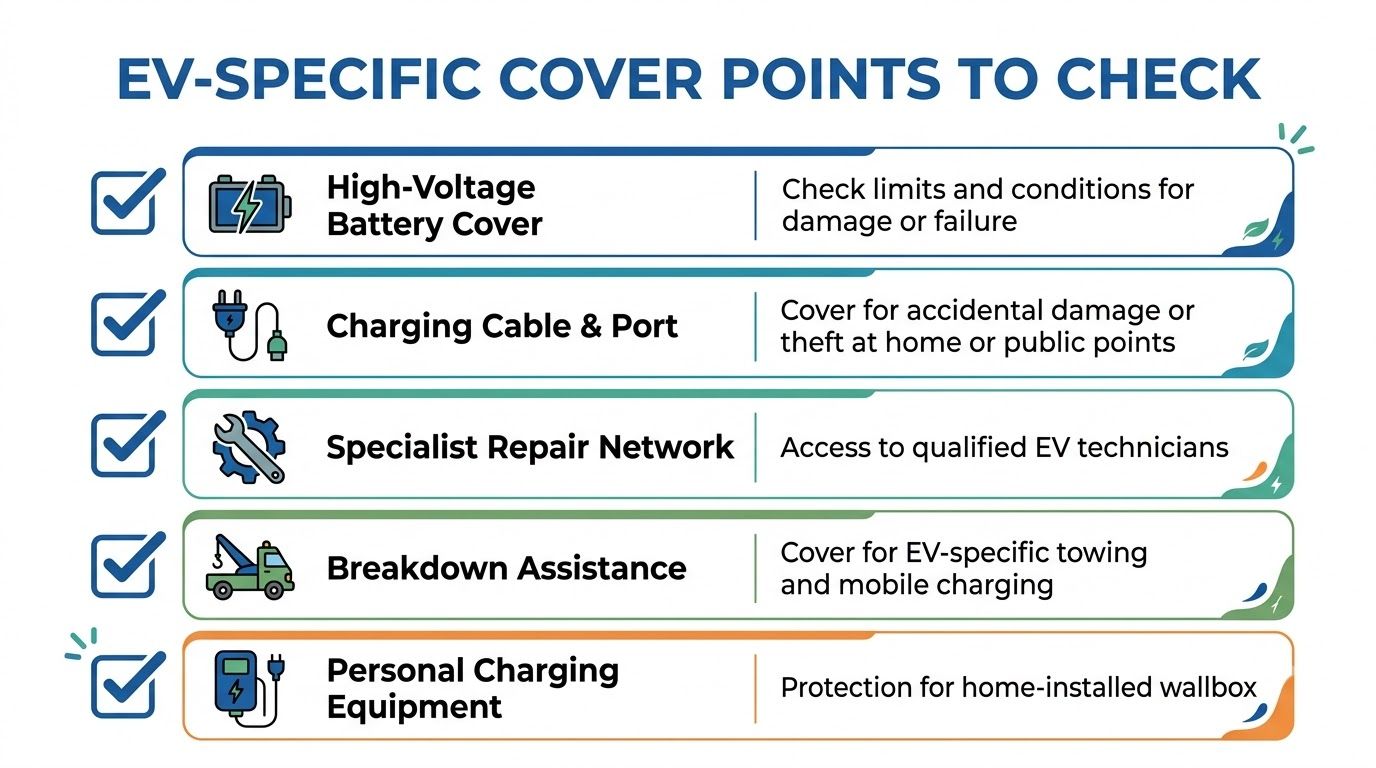
A standard policy is not the same thing as an EV-ready policy. The first job is to ask what happens if the battery is damaged, the charging cable is stolen, or the car is stranded with no charge. Those are ordinary ownership risks for an EV, even if they never come up in a petrol-car comparison.
Ask these questions directly
Battery cover: Does the policy cover accidental damage to the high-voltage battery, and does it treat battery failure as an insured loss or as wear and tear?
Charging cable and adaptors: Is the portable cable covered if it is stolen or damaged, and does that extend to adaptors?
Home wallbox: If a wallbox is fitted at home, is it covered under the motor policy, home insurance, or not at all?
Breakdown rescue: What happens if the car runs flat on the road, and does recovery include EV-specific towing or mobile charging support?
Public-charging liability: If someone trips over a charging cable, or if public charging equipment is involved, what liability cover applies?
Irish consumer research shows buyers care about exactly these items. Aviva says battery failure cover is the top EV insurance feature, followed by breakdown rescue when the car runs out of power, then cover for charging cables, wallboxes, and adaptors, and finally liability cover if someone trips over charging cables Aviva EV insurance features research. That lines up with common sense. People do not buy EV insurance for an abstract badge, they buy it to protect the things that are unique to EV ownership.
A used-EV buyer should treat battery cover as a question, not an assumption. If the answer is vague, the policy still needs work.
The safest approach is to get the insurer or broker to spell out exclusions in writing. That matters more than any marketing claim about "EV-ready" cover, because the wording is what counts after a claim.
Practical Ways to Keep the Bill Down
There is no magic trick here, and there are no secret discounts worth chasing blindly. The practical levers are the same ones that work on ordinary motor insurance, but they matter more when the car value and repair profile are doing extra work behind the scenes.
ShamAuto's home charger guide is useful because buyers who charge at home should know whether the wallbox is insured somewhere already, or whether they are duplicating cover without realising it.
The levers that actually matter
Compare quotes properly: Use more than one insurer and more than one broker, because EV appetite still varies a lot.
Raise the voluntary excess carefully: A higher excess can reduce the premium, but only if the buyer can afford it after a claim.
Check telematics or low-mileage options: If the annual use is light, those policies may fit better than a standard quote.
Keep the details clean: No-claims proof, named-driver information, overnight parking, and commuting use should all be accurate.
Avoid duplicate extras: Don't pay twice for roadside assistance, cable cover, or equipment protection that may already sit elsewhere in the policy pack.
Some Irish insurers have promoted EV or low-emissions discounts, but offers change often, so the only sensible move is to ask what's live today and compare it against a plain quote. A buyer should not anchor on a forum figure or a friend's premium, because those numbers almost never match the same driver, the same postcode, and the same car.
The best money-saving decision is often not the cheapest sticker policy, it is the policy that fits the buyer's real use and doesn't force a costly claim dispute later.
Documentation Buyers and Sellers Should Provide
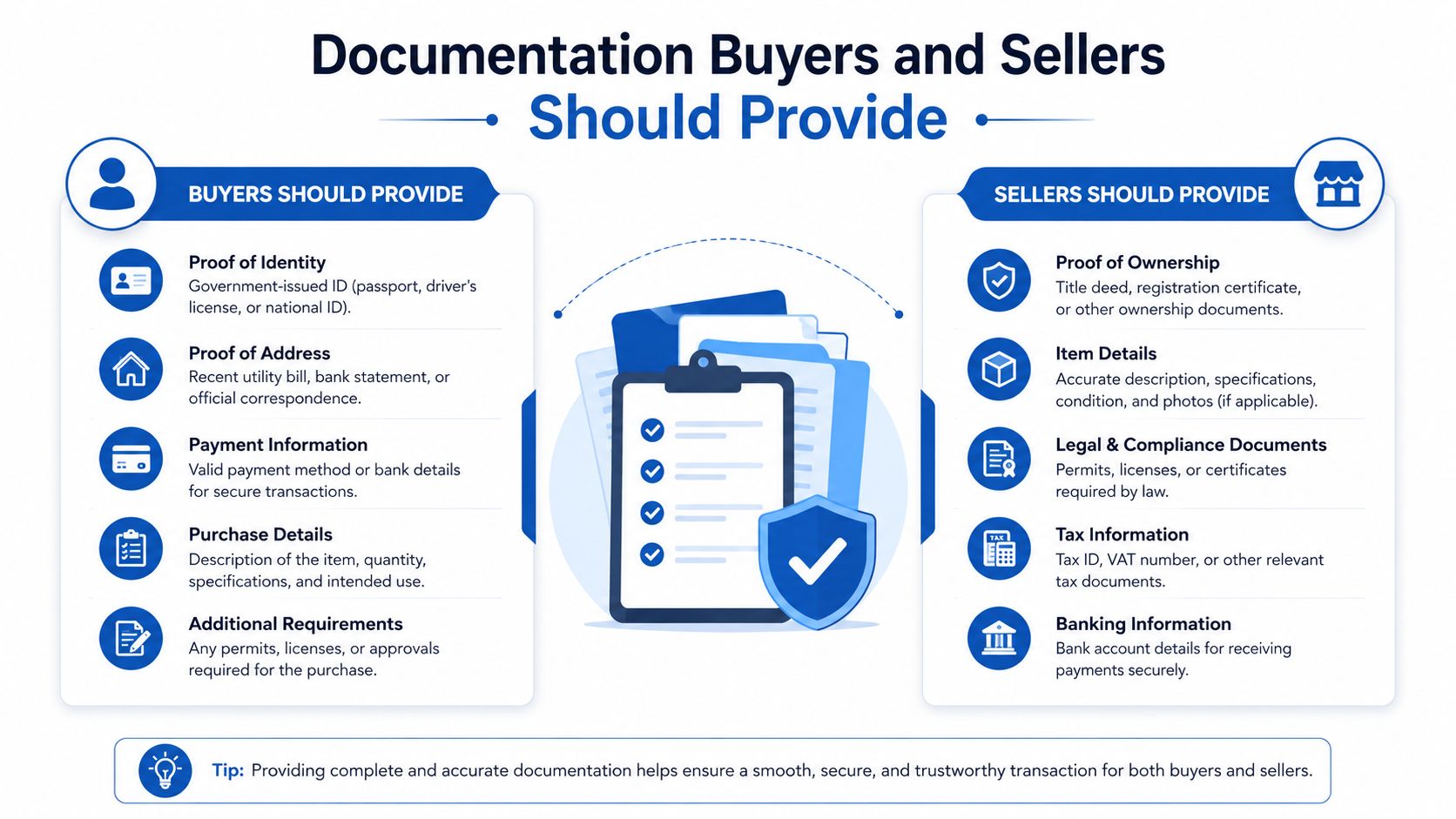
Used-EV insurance gets easier when the paperwork is clean. A dealer or private seller should be able to show service history, VRT and NCT status, the vehicle book or logbook, and any available battery health evidence. An SoH screenshot matters because it gives the buyer a measurable view of remaining battery health, not a guess based on how the car feels on a test drive.
What should be in the file
For buyers, the important EV-specific item is a State of Health (SoH) screenshot or battery diagnostic report if one exists. ShamAuto verifies SoH when diagnostic screenshots are supplied, because a battery that has clearly documented health is easier to assess than one that only comes with reassurance.
For sellers, the accessory trail matters too. The charging cable, adaptors, wallbox make and serial number, and any purchase documents for charging equipment should be kept together. That does not just help the sale, it helps the buyer and insurer understand what is included with the car.
Second-hand EV buyers should also remember that the SEAI purchase grant is for new battery electric vehicles only, not used imports or second-hand sales. The official scheme wording should always be checked directly on SEAI's current grant page before anyone assumes a used car qualifies. Used-EV pricing and insurance should be judged on the actual car, not on a grant expectation that does not apply.
What to Ask Dealers and Private Sellers Before You Quote
A buyer who asks better questions gets a better quote. For a dealer, the first questions should be about the car's insurance group, whether any battery or cable protection is already covered under the manufacturer's programme, and whether the battery has had diagnostic work done recently. Those answers tell an insurer more than the badge on the tailgate.
Private sellers need a different line of questioning. Ask how the car was charged, whether it saw regular public DC fast charging, what home charger was used, and whether a recent SoH screenshot is available. A clean answer is not a promise of perfection, but it does give the buyer and the insurer a better picture of how the battery has been treated.
ShamAuto's buying guide is worth using alongside those questions, because a used EV should be judged on evidence, not optimism. Insurance quotes are personal, and the only meaningful answer comes from entering the buyer's own address, driver profile, and chosen car into a comparison process.
Dealer rule of thumb: if the seller can't point to battery evidence, accessory inventory, and clear charging history, the buyer is doing the risk work blind.
That also keeps the insurance conversation grounded. The insurer is pricing a specific vehicle and a specific driver, so the cleaner the car's history, the less guesswork sits between the buyer and a fair quote.
Insurance in the Real Cost of Running a Used EV
Insurance is only one line in the running-cost story, but it is a real one. A used EV buyer still has to think about purchase price, charging, motor tax, and insurance together, not as separate silos. The car's technical reality matters too, because every EV is automatic, with a single-speed setup, no clutch, and no gearbox to worry about in the old manual sense.
Range needs to be kept honest as well. ShamAuto uses WLTP minus 17 percent as a conservative real-world range estimate, so a 400 km WLTP figure is shown as about 332 km in practice. That matters because range confidence affects where the car can be used, how often it charges, and how comfortable the owner feels about running it daily.
The used-EV buyer should reject borrowed numbers from forums and friends. Those figures are almost always wrong for the next driver, because the premium depends on the person, the postcode, the car, and the exact cover wording. The only number that counts is the quote generated from the buyer's own details.
ShamAuto gives Irish buyers and sellers a place to compare used EVs with battery health, range, and charging details front and centre, so the insurance conversation starts with facts instead of guesses. Browse ShamAuto and use the guides to check the car properly before you ask for quotes.