
Electric Cars for Sale Ireland: A Comprehensive Guide 2026
Contents
- Why a Used EV Is Bought on Evidence, Not on the Cheapest Ad
- The Three Specs to Compare on Every EV Listing
- Range and Charging Reality on Irish Roads
- Costs, Grants and What a Second-Hand EV Does Not Get
- Used EVs Irish Buyers Commonly Shop For
- How to Browse ShamAuto the Smart Way
- Before You Travel to View, Demand the Battery Evidence
The cheapest ad is rarely the best buy in electric cars for sale in Ireland. A used EV should be judged like a battery asset first and a car second, because battery health, realistic range, and charging fit decide whether the car suits real Irish driving. The good news is that every EV is automatic, with a single-speed setup, so there's no clutch or gearbox to worry about, which shifts the whole job towards evidence.
A seller can ask a fair price and still be poor value if the battery has drifted badly. Two same-age cars at similar money can sit miles apart in real worth once State of Health (SoH) is factored in, and the higher verified SoH usually wins. That's the mindset to bring to any viewing, private or dealer, before a test drive ever happens.
Why a Used EV Is Bought on Evidence, Not on the Cheapest Ad
The wrong way to shop is to sort by lowest price and hope the rest works out. That approach is fine for old hatchbacks with a simple service history, but on a used EV it can leave the buyer staring at a bargain that has weak range, slow charging, or battery degradation that the advert glossed over.
Battery evidence beats headline price
A used EV is only good value if the usable battery still gives proper range and the charging setup fits the buyer's routine. Usable battery (kWh) matters because it is the actual energy the car can draw, not the brochure number, and that affects both distance per charge and what a full charge costs. The car's automatic drivetrain takes one headache off the table, but it doesn't make a tired battery any better.
Practical rule: if the seller can't show battery evidence, the car is not ready for a serious buyer.
That evidence matters most in Ireland because the market is now broad enough to support many choices, not just one obvious model line. Irish BEV registrations reached 23,601 in 2025, which was about 35% up on 2024 and equal to 18.9% of all new vehicle registrations, according to the European Alternative Fuels Observatory. More new cars mean more future used stock, and more used stock means buyers can be choosier about evidence.
The real question is not "cheap or dear"
The key question is whether the battery still has enough usable life left to justify the asking price. A car with stronger SoH can cost more and still be the better deal because it reduces range risk and avoids nervous ownership later. That's especially true for private listings, where battery condition is often described vaguely or not at all.
The straight answer is this. A used EV should never be bought on the advert alone. The buyer should demand battery proof, compare real-world range, and only then decide whether the asking price makes sense.
The Three Specs to Compare on Every EV Listing
A proper EV listing needs three things in plain sight. If one is missing, the advert is incomplete and the buyer is left guessing. Those three specs are usable battery (kWh), real-world range, and State of Health (SoH).
Start with usable battery, not model badge
Usable battery is the capacity the driver can draw from the pack. That is the number that matters when comparing trims, because two cars from the same model line can behave differently on a full charge if the battery size differs. It also matters for charging spend, because more usable capacity means more energy needed to refill the car.
Use a conservative range number
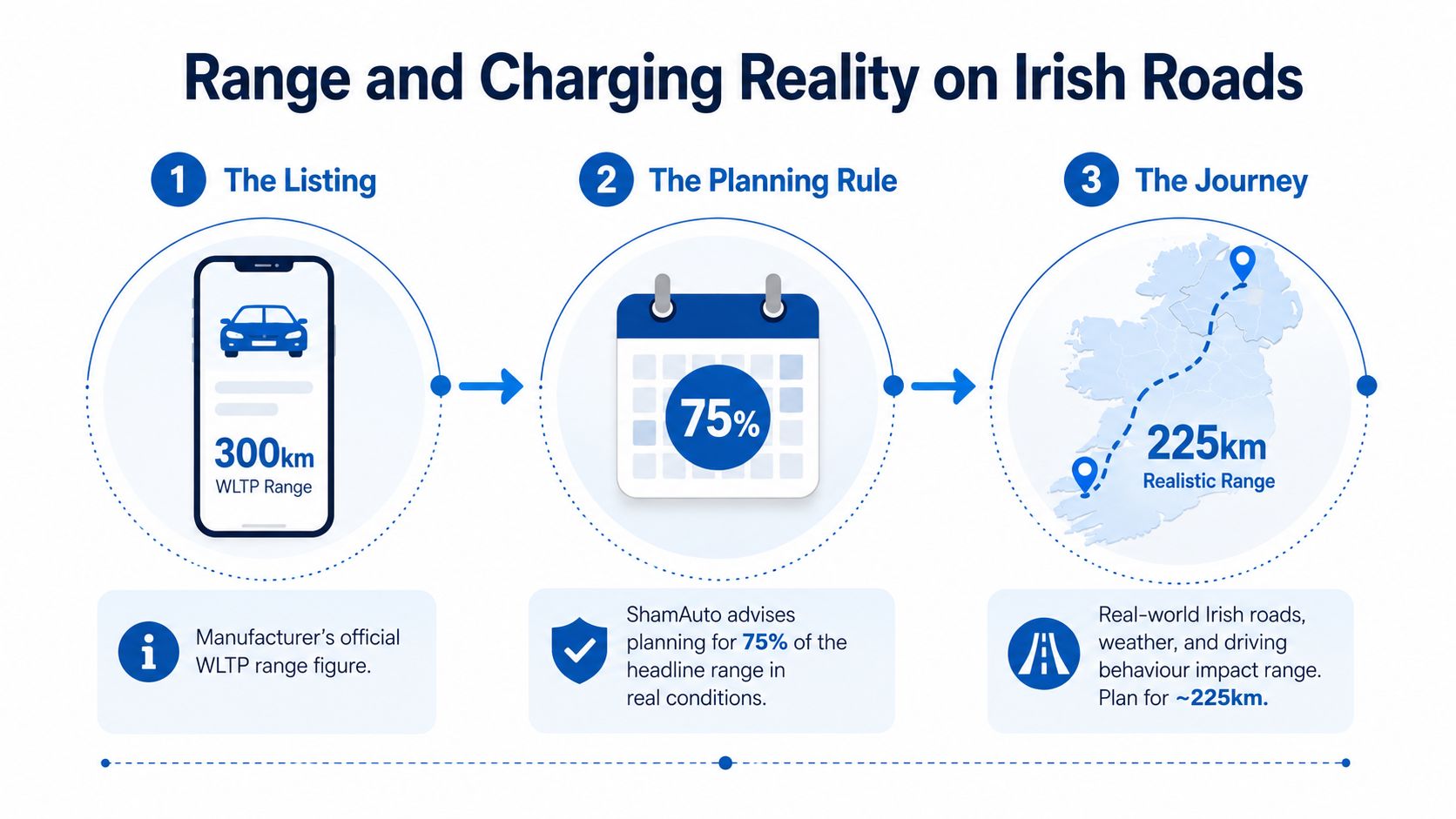
Real-world range should not be treated like a glossy brochure claim. The planning figure used here is WLTP minus 17 percent, which gives a cautious Irish-road estimate rather than an optimistic lab result. A listing that quotes WLTP alone is giving a headline, not a journey plan.
SoH is the deal-maker
State of Health (SoH) shows how much of the original usable battery capacity is still left, as a percentage. A listing can carry a Verified badge when the seller uploads a diagnostic screenshot, and that is the signal to trust, not a casual phone snap. As general guidance, many buyers treat about 85% or higher as reassuring on higher-mileage cars.
Between two same-age cars at a similar price, the higher verified SoH usually wins.
That rule cuts through a lot of noise. One car may look cheaper on the ad screen, but if the battery is weaker, the buyer can lose range headroom and later resale confidence. The better move is to compare usable battery, real-world range, and verified SoH together, then ignore the shiny headline that doesn't survive scrutiny.
Range and Charging Reality on Irish Roads
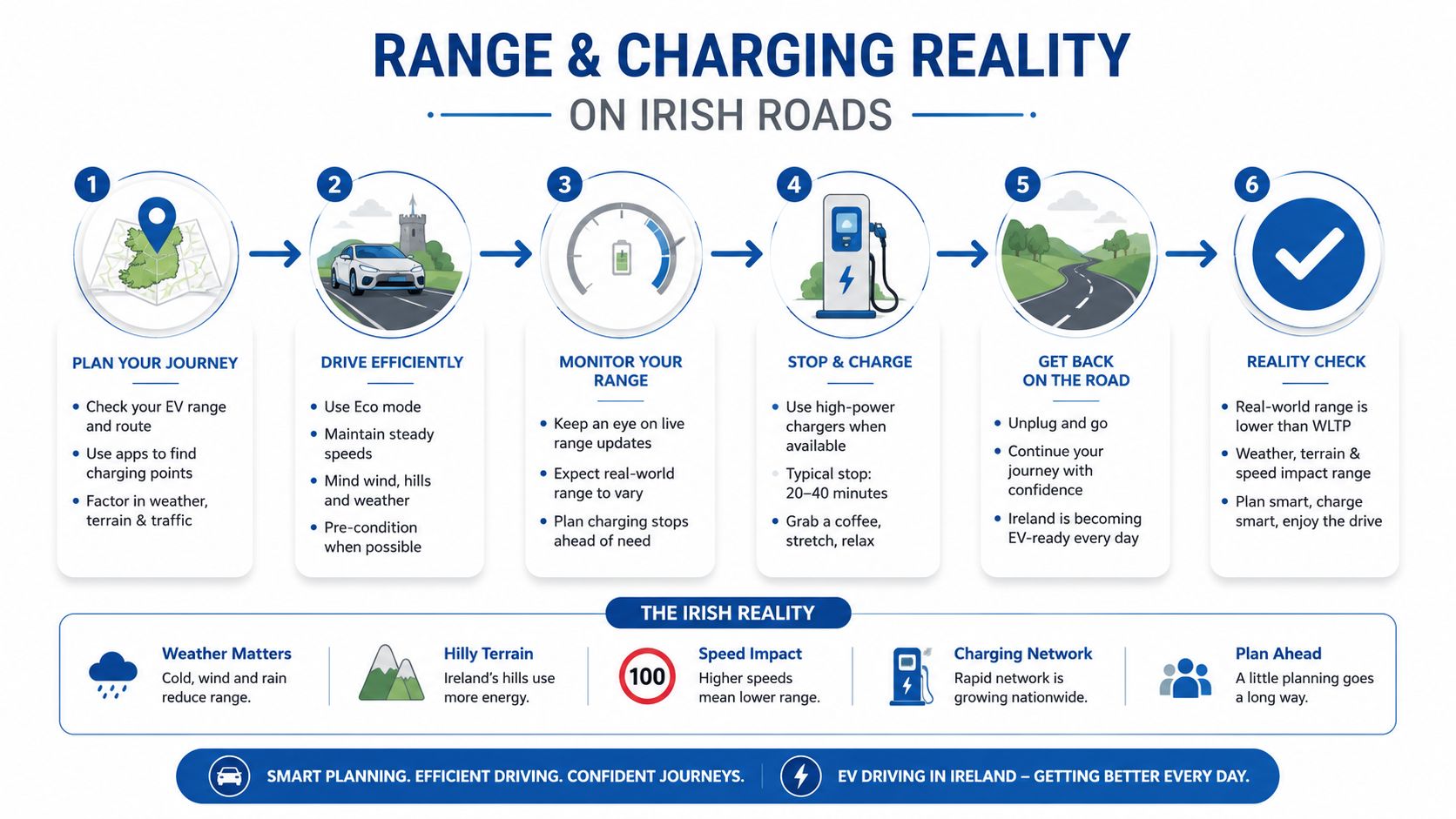
Brochure range flatters a car. Irish roads expose it. Motorway speeds, cold weather, heater use, and short stop-start trips all drag the number down, so the sensible move is to plan with margin from the start. That is why WLTP minus 17 percent is a better working figure than repeating the quoted range as if it were a guarantee.
A simple commute check
A car advertised at 400 km WLTP should be planned at about 332 km in real use with the conservative method. That still gives a comfortable buffer for a 100 km each-way commute, even before winter loss is taken into account. The point is not to chase the biggest paper figure. The point is to know the car will do the route without drama.
If you are looking at a longer-range hatch or SUV, check a model-specific guide before you trust the headline number. ShamAuto's guide on the real-world range of the Hyundai Ioniq 5 is a good example of the sort of practical comparison that matters more than showroom figures.
Home charging is the everyday solution
For most Irish owners, 7.4 kW single-phase home charging is the normal setup. 11 kW is faster, but it needs three-phase supply, which is rare in Irish homes, so it should not be your default assumption. DC rapid charging suits longer trips and quick top-ups, not the daily routine.
A weak on-board AC charger changes the ownership experience even if the range looks fine on paper. Match the car's charging hardware to the way you drive it. Otherwise you end up with a car that looks sensible on the ad, then feels awkward every time you plug in.
For a straight explanation of the gap between brochure claims and Irish-road use, read real-world range versus WLTP. If you are sorting out the basics of home charging before you buy, ShamAuto's guide to charging a used EV at home in Ireland sets out what works and what does not.
Costs, Grants and What a Second-Hand EV Does Not Get
A used EV does not qualify for the SEAI purchase grant, full stop. Citizens Information says the SEAI BEV grant is for new cars only, can be up to €3,500 for qualifying new BEVs within SEAI's price cap (lower limit €14,000, upper cap reduces to €50,000 from 31 July 2026), is handled by the dealer at the point of sale, and used EVs do not qualify. Check SEAI for current limits before you price any car (Citizens Information).
Check the official sources before you price the car
Do your costing from the official rules, not from guesswork. SEAI sets the grant and home-charger supports, Revenue covers VRT and motor tax, gov.ie carries the scheme rules, and ESB publishes public charging tariffs. Those figures change, so the live source matters more than any blog summary.
A sensible buyer prices the car as a package before talking money with the seller. Include purchase price, home charging, motor tax, and insurance, because a low ad can turn into an expensive ownership choice if the battery is tired or the charging setup does not suit your routine.
Don't chase one number
The sticker price is only the start. What matters is what the car costs to own in Ireland, then whether the asking price still stacks up. The used-EV market rewards buyers who check the full picture and punishes buyers who treat every ad like a petrol car with a plug.
For current tax and motoring rules, start with the guide on EV motor tax and NCT in Ireland. For charging cost comparisons, use cost to charge, then check live tariffs with the provider before you decide what the car will really cost to run.
Used EVs Irish Buyers Commonly Shop For
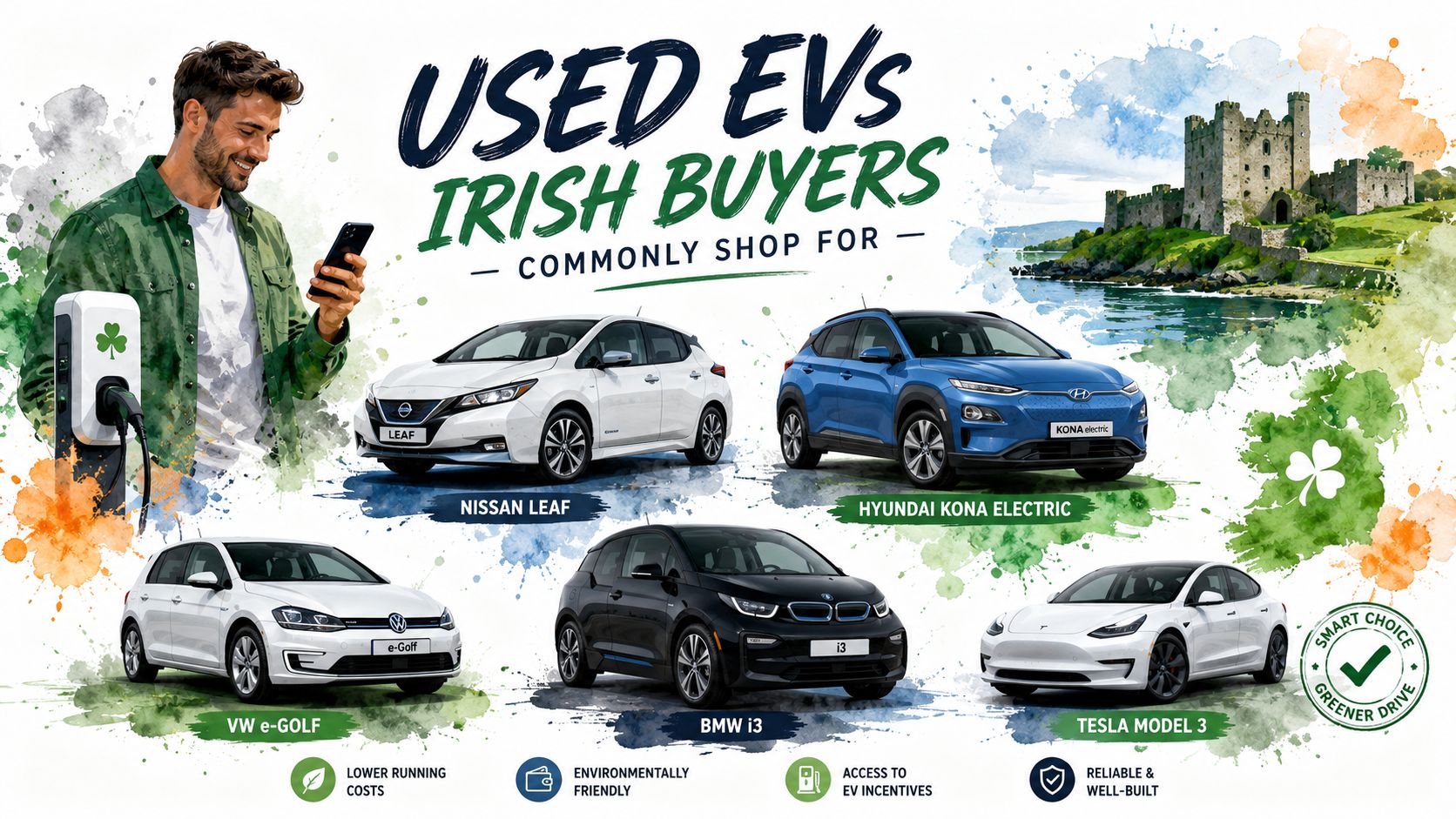
The Irish used-EV market has a few familiar names because they fit different jobs well. The point is not to rank them like a league table, it's to understand what sort of buyer each one suits and what to check before money changes hands.
The long-range and family-friendly choices
The Tesla Model 3 and Volkswagen ID.4 are the cars many buyers look at when they want longer-commute capability and a more relaxed motorway habit. Both are automatic, as all EVs are, and both attract buyers who want a car that feels like a main family vehicle rather than a second runabout. The ID.4 is also one of Ireland's best-selling EVs.
The efficient practical crossovers
The Hyundai Kona Electric and Kia Niro EV appeal to buyers who want sensible shape, efficient use of battery capacity, and everyday practicality. They are the sort of cars that make sense for mixed driving, school runs, and commuting without feeling oversized. Again, battery condition matters more than badge loyalty, because a neat advert can still hide a tired pack.
The entry-level workhorse
The Nissan Leaf is often the cheapest route into EV ownership, and that's why it gets a lot of attention. It also makes battery evidence especially important, because the cheapest listing is not automatically the safest buy if SoH is weak or charging expectations are mismatched.
The market is also becoming more varied. Over 100 different EV models are now on sale, which shows how quickly trim, battery size, and charging standards are spreading across the fleet. That makes a model-first approach less useful than a spec-first one.
Start with a real-world range band and a minimum verified SoH, then see which models fit the budget.
That is the cleanest filter for buyers who don't want to waste weekends looking at EVs that fail the basics. Model choice matters, but only after the battery and range criteria are met.
How to Browse ShamAuto the Smart Way
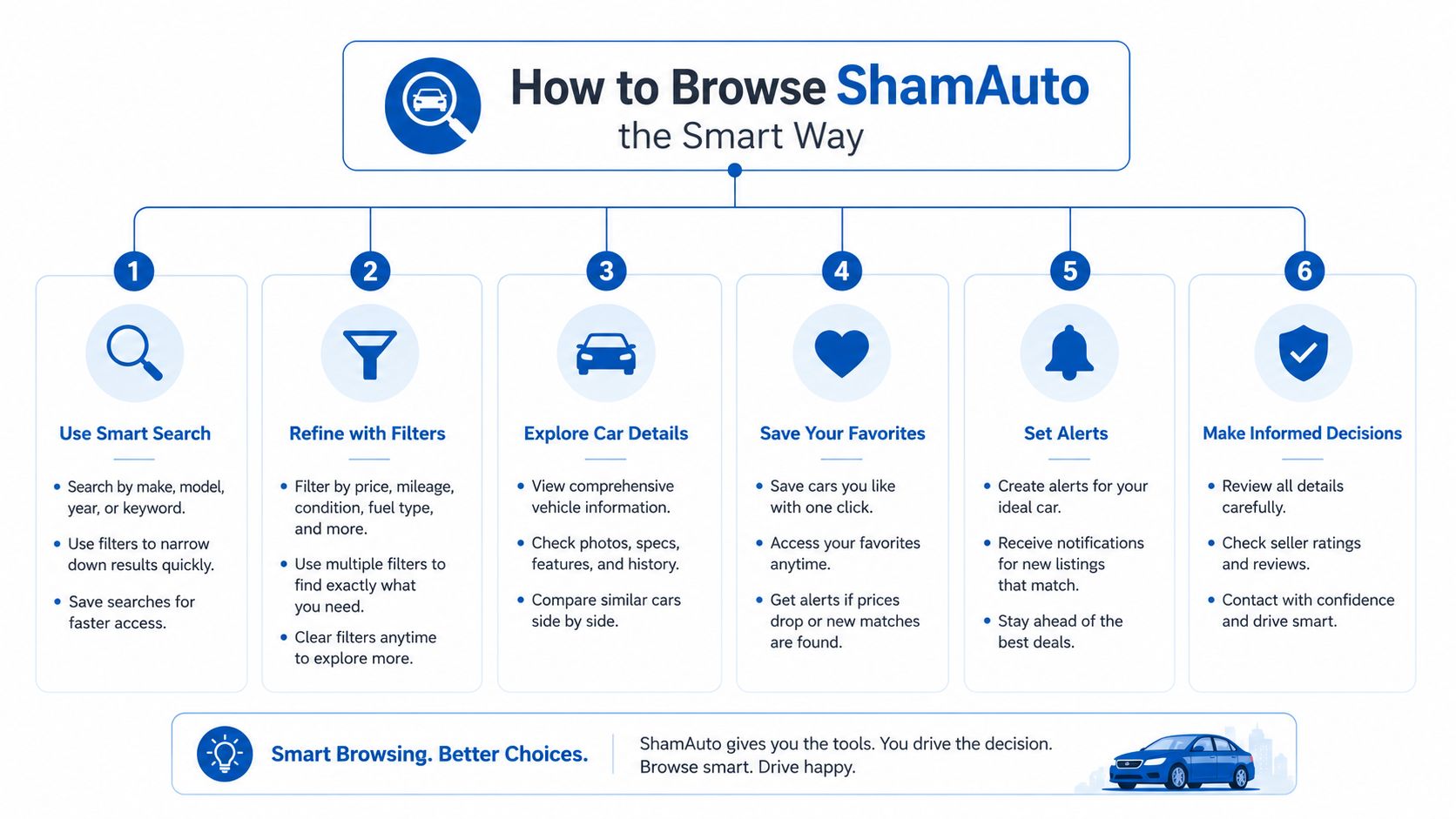
The point of an EV-only marketplace is simple, it forces the buyer to compare real EV facts before any shiny advert gets in the way. On a site built for electric cars, the sensible move is to start with battery evidence and usable range, then narrow the search with local stock. ShamAuto does that better than a general car site because the listings are already organised around EV-specific details.
Filter in the right order
Start with real-world range band, because the car has to handle daily driving with margin left over. Then use county, because local stock cuts out pointless trips. After that, set price, and only then tighten the search with State of Health (SoH) and the Verified badge.
That order matters because price alone tells you very little on a used EV. A cheap car with weak battery health can cost more in the long run than a dearer one with decent SoH and honest range headroom. Buyers save time when they sort by the factors that affect ownership quality first.
Use the battery proof before you fall in love with the badge
The smart move is to check range and battery health before you sort by price. That stops the classic mistake of travelling to see a bargain that looks fine online but falls apart once the battery evidence is examined. The practical guides on buying a used EV in Ireland and how to check battery SoH before you buy support that way of shopping.
ShamAuto is still building stock, so the better approach is to be among the first to list rather than assume the site is already packed. Private sellers and dealers can list without commission, and county browsing keeps the search local when that matters more than chasing a car across the country. For buyers, the main site at ShamAuto cars is the place to compare EVs by real data instead of guesswork.
Before You Travel to View, Demand the Battery Evidence
Do not waste a full day on a viewing if the seller cannot show battery proof upfront. A proper diagnostic SoH screenshot, ideally from a recognised tool, should be on the table before you even think about driving over. The listing should also show real-world range, not a glossy guess, so you can judge whether the car suits your driving.
That is the filter that saves you from nonsense. If the seller dodges the battery question, walk away. If the range only makes sense when you trust the brochure figure and ignore how the car behaves on Irish roads, leave it there.
Before you set off, ask for the basics in writing. Request the battery report, the latest charging details, the service history, and clear photos of the dash, tyres, and charger ports. If the seller hesitates on any of that, the viewing is already on shaky ground.
Once you arrive, check the car like you mean it. Start it from cold if possible, look for warning lights, and make sure the charge port opens cleanly and locks properly. Test the cabin heat, the infotainment, and the charging cable if one is included. A tidy advert means nothing if the car shows signs of poor care in person.
Use ShamAuto's Verified badge and county filters to cut out guesswork before you travel. The badge gives you a quick check on the listing, and the county search keeps you focused on cars you can inspect without turning the whole thing into a road trip. Compare a few examples side by side, then go for the one with the clearest evidence, not the flashiest photos.
If the battery proof is weak, skip the trip. If the car has clean paperwork, honest range, and sensible charging behaviour, then you are looking at a proper candidate, not a gamble.